The Old School RuneScape economy is a large, active digital market with its own supply, demand, and currency sinks. Unlike games with unchecked currency generation, OSRS uses several systems that affect prices over time. Reading the data starts with understanding those systems.
Technical analysis vs. fundamentals
As OSRS prices became easier to access through APIs, traders started debating how much Wall Street-style technical analysis (TA) applies to virtual items.
OSRS is a medieval fantasy game, and its market does not behave like the S&P 500. There are no quarterly earnings reports for Dragon Boots or CEOs giving guidance on Tumeken’s Shadow. Demand often ignores chart patterns. A player doing a Vorkath task does not wait for the Dragon Hunter Lance to approach a technical resistance level. They buy it because they need it, and the GE buy limit stops large pools of capital from correcting every pricing gap at once.
Tracking a 7-day simple moving average (SMA) against a 30-day SMA is still useful. It will not predict the future, but it shows momentum and the way players are moving together. That can help separate a temporary dip from a deeper price decline.
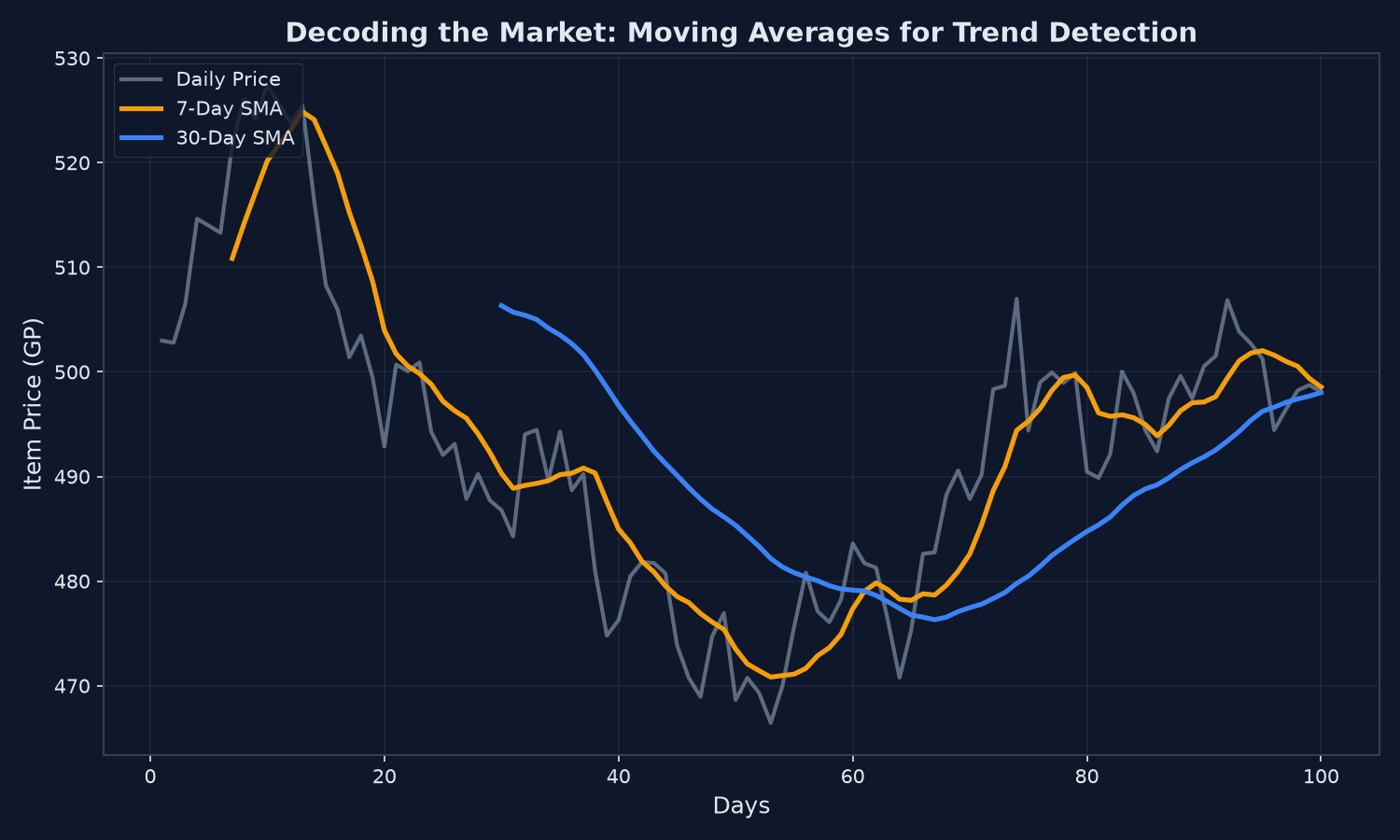
Moving averages smooth out noise so you can see momentum, not just volatility.
Market movers: what drives GE prices?
Several recurring events move prices more sharply than historical chart patterns:
- Bot ban waves: Removing thousands of automated farming accounts can reduce the supply of raw materials quickly and make older chart patterns less useful.
- The GE tax and item sinks: The 2% transaction tax removes GP from the game. The automated item sink also uses those funds to buy and delete high-tier PvM items, reducing supply in that part of the market.
- Player count cycles: Players returning for limited-time modes such as Deadman Mode or Leagues can push up the prices of starter gear and bonds as new accounts progress.
Building a QuantScapers portfolio
A portfolio needs room for both steady trades and sudden changes. Keep some capital in liquid GP, and use another portion for items with regular demand. That leaves you able to respond when new content creates a short-lived rush.
Related reading: The Quant’s Guide: How to Flip in OSRS turns this market reading into concrete trades, and Grand Exchange Bets: The Risk of Update Speculation covers update-driven positions.