The Wilderness turned 25 this week. A r/2007scape anniversary thread marked the date as August 13, 2001, when the dangerous area opened in RuneScape Classic.
That is a long time for one design idea to survive unchanged. The Wilderness still depends on the same basic bargain: put valuable activities in a dangerous place, then let other players hunt the people who came for them.
The bargain can produce memorable moments. It can also produce a loop where the PvM player is treated as content, the PKer is given a target instead of an opponent, and neither side gets much practice at the thing they actually want to do.
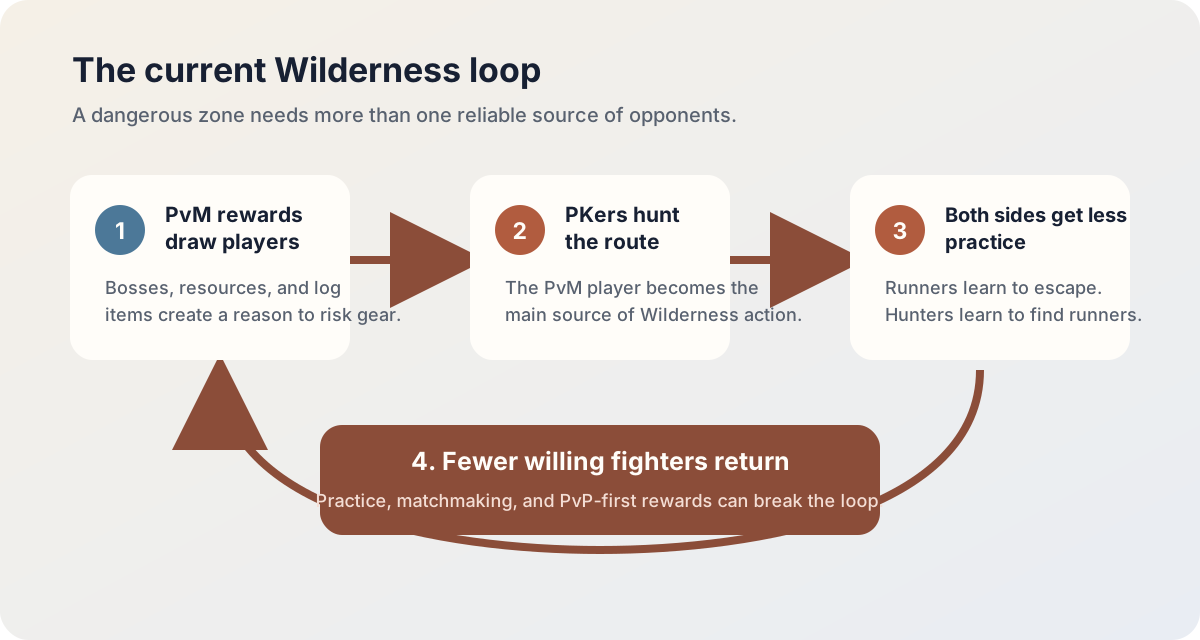
The predator and prey setup is an ingredient of the Wilderness. It should not be the only route into PvP.
Predators and prey are not the same as PvP
The community has argued about this distinction for years. In one 2007scape discussion, players described an older Wilderness as a food chain. An inexperienced PKer could find a skiller, a stronger PKer could find that PKer, and each link had a reason to remain in the area.
Other players describe the modern version as a more one-sided cat-and-mouse game. The predator versus prey discussion makes the complaint directly: the Wilderness keeps being used to create targets for PKers, while the people doing PvM are usually trying to escape rather than fight.
Those are not mutually exclusive descriptions. The Wilderness can be dangerous by design and still have an unhealthy incentive structure.
For a PvM player, the best response to a scout or PKer is usually to protect the valuable items, switch prayers, freeze or tank when possible, and reach a teleport or exit. That can be exciting when the player chooses it. It is not the same skill path as learning to initiate a fight, manage a switch under pressure, or make decisions against an opponent with the same objective.
For a PKer, an unprepared target can provide loot and a quick win. It does not provide a reliable way to practice against someone who knows the matchup and wants to fight back. If the only dependable population comes from people doing something else, the system is asking one group to supply the other group’s activity.
The cost of making PvM the population plan
The usual defense of Wilderness PvM is that risk needs a reward. That is fair. A dangerous area should not be a normal bank route with a different color on the map.
The problem is making non-PvP progression carry too much of the burden. Once a boss, resource, or collection log item becomes the reason players must enter, the area is no longer just offering an optional fight. It is charging a PvM player an access fee in attention and risk. Some players will accept that price. Many will decide the reward is not worth the interruption and never return.
That choice also feeds the reputation problem. A player who expects to be hunted brings the smallest risk they can, teleports as soon as possible, and leaves with the impression that the Wilderness is an obstacle. A PKer who sees only low-risk runners has an incentive to keep hunting runners. The next PvM player then enters an area with even less reason to fight back.
This is why the discussion is not solved by telling PvMers that the Wilderness is dangerous. Most of them already know. The question is whether danger is creating interesting decisions or simply making a task slower and more annoying.
Jagex’s own survey points at the gap
The current OSRS Quarterly Survey is useful because it asks about PvP without assuming that every respondent is a PvPer. It lists low-risk practice activities, easier escape, better defensive options, tutorials, clear setup guidance, and fairer matchmaking as possible ways to encourage more players to try PvP.
It also asks whether future updates should make Wilderness engagement feel optional, help newer players learn, make rewards worth the risk, or keep Wilderness rewards useful only inside PvP. Those are not the questions a game asks when the current predator and prey loop is working perfectly.
The survey does not decide the answer. It does show that the problem is broader than one boss or one teleblock mechanic. Players are split over risk, rewards, fairness, and the route into the activity itself.
The learning problem is real
The PvP Bootcamp by Katerena is a good example of the missing bridge. The event gives newer or returning players a structured way to watch and learn from experienced players. Comments in the thread repeatedly focused on the steep barrier to entry and the lack of a clear learning path.
That enthusiasm should not be mistaken for a complete solution. A creator event can make PvP feel less mysterious for a few days. OSRS needs a repeatable version that exists when the stream is over and does not require a new player to risk their bank while learning what a freeze, gear switch, or special attack setup does.
A better Wilderness would keep the danger
Retiring the predator model does not mean turning the Wilderness into a safe skilling zone. It means stopping the idea that reluctant PvMers are the only dependable way to populate PvP.
The first step is a low-risk practice route with loaner setups, clear drills, and fast rematches. Last Man Standing and the PvP Arena already point in that direction, but a new player needs a clearer progression from tutorial to real fight. Practice should teach movement, protection prayers, freezes, eating, and gear changes without requiring a large cash stack.
The second step is matchmaking that respects experience. A player learning basic switches should not be thrown into the same pool as someone who has spent years fighting in the deep Wilderness. Fairer fights would produce better practice for both sides and give new PKers a reason to stay after their first few losses.
The third step is to reward combatants for fighting other combatants. PvP rewards can still create demand in the wider economy, but the activity should not depend entirely on a player carrying bones, a clue, or a boss drop through a hotspot. The more the reward tracks meaningful fights, the less the system needs to bait people who did not come to fight.
The fourth step is to make non-PvP progression optional. Wilderness content can offer exclusive rewards and a different risk profile. It should be possible to want a PvM upgrade without feeling that the game has assigned you to be somebody else’s practice dummy.
What the Wilderness should be next
The Wilderness is not failing because it is dangerous. It is failing when danger is the only interesting interaction available to one of the players involved.
After 25 years, the area can keep its uncertainty, its stories, and its risk while giving PvP a better foundation. Let willing fighters find each other. Let new players learn without staking their bank. Let PvMers enter the Wilderness because the risk fits the activity, not because they are being used as the population plan.
That would not erase the old Wilderness. It would give it a future beyond the same predator chasing the same prey.
Related reading: Reading the OSRS Market is useful when a Wilderness update changes supply or demand, and The Quant’s Guide: How to Flip in OSRS covers how to separate a real market move from a short-lived update spike.